HomeEuropeFranceParis First-timers
🗺️ First-timers guide

First Time in Paris — Complete Beginner's Guide 2026

What to book early, what to skip, and how not to waste a day on your first Paris trip
Built by travelers, for travelers · Last updated 2026-04-17 · 12 sources verified
Explore guide → Book tours
Updated 2026-04 12 sources verified Quarterly freshness checks

Paris has 130 museums and welcomes 44 million visitors annually. First-timers should spend 3–5 days to cover the Eiffel Tower, Louvre, and Seine neighborhoods without rushing. Budget $110–300 daily depending on meals and hotels; expect to spend $17–22 per museum and $2.78 per metro ticket.

FinderTrip research · April 2026 · verified sources

This guide is built for you

Every section is structured differently by traveler type. Switch type to see a genuinely different guide — different section order, different neighborhoods highlighted, different restaurant sort.

This page section order
1
The 15 Things Worth Your Time
only
2
Your First Day in Paris — Hour by Hour
3
Tours That Actually Earn Their Price
4
Where to Stay for the Best First Trip
5
What to Eat in Your First 48 Hours
6
Getting Around Without Getting Lost

The 15 Things Worth Your Time

Paris has 130 museums and thousands of restaurants. This is the shortlist — the things that are actually worth your limited time on a first visit.

Eiffel Tower
Featured

Eiffel Tower

It's Paris's defining symbol. Standing beneath it or ascending to the summit (324 meters) delivers an emotional payoff no photo captures. Sunset visits offer city lights across the Seine.

Book →
Insider

Book the Eiffel Tower summit at exactly 8 AM Paris time, 60 days in advance. That's when new slots release. Evening slots (7–11 PM) sell out first. The 60-day-ahead 8 AM release is not widely advertised but it's consistent. A calendar reminder 60 days before your visit date takes 30 seconds and saves 2 hours of queuing.

Louvre Museum

Louvre Museum

The world's largest art museum holds the Mona Lisa, Venus de Milo, and 380,000 other objects. The glass Pyramid entrance is iconic; the palace itself is worth exploring.

Notre-Dame Cathedral

Notre-Dame Cathedral

Gothic masterpiece rebuilt after the 2019 fire and reopened in 2024. The façade is instantly recognizable; interiors feature soaring arches, stained glass, and 850 years of history.

Arc de Triomphe

Arc de Triomphe

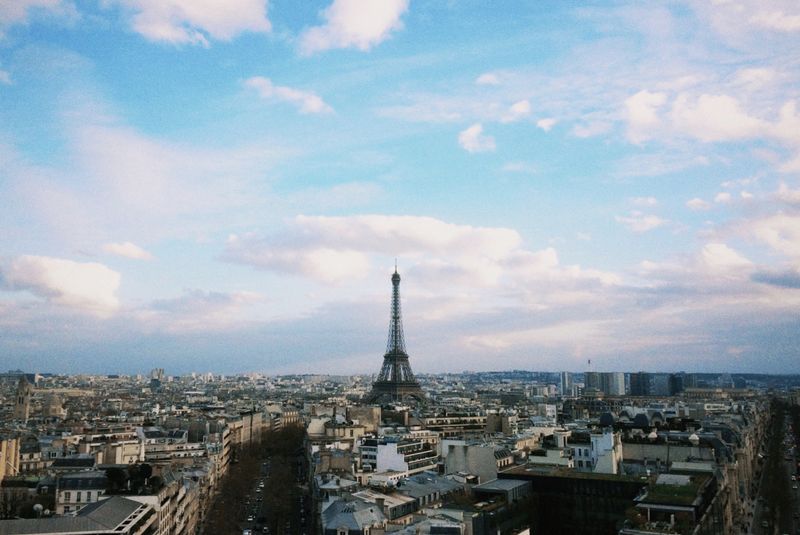
50-meter monument honoring French military victories sits at the hub of 12 radiating avenues. Climbing 284 steps yields 360° panoramic views of Paris, including Eiffel Tower.

Musée d'Orsay

Musée d'Orsay

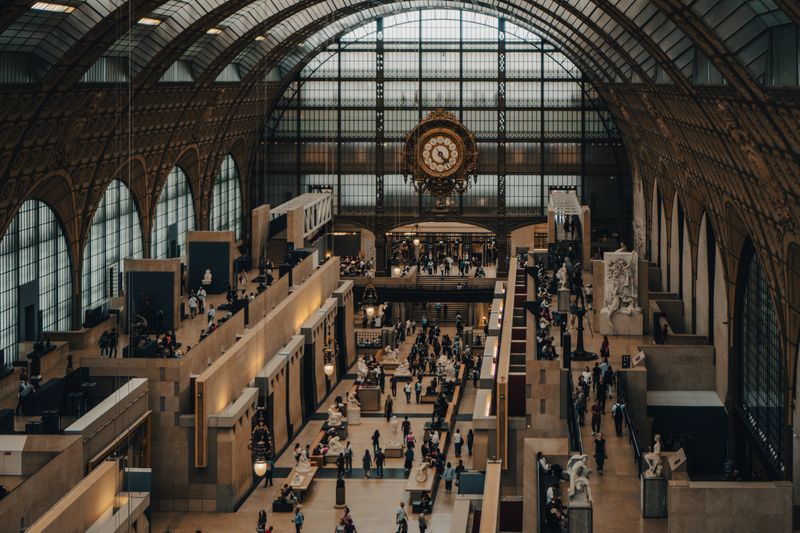
Housed in a 1900 Beaux-Arts train station, Orsay showcases Impressionist masterworks by Monet, Renoir, and Van Gogh. The building itself—with its ornate clock and skylights—is a museum experience.

Sacré-Cœur Basilica

Sacré-Cœur Basilica

White dome crowning Montmartre offers sunset views of Paris's city lights. The basilica houses the world's largest mosaic and 300 marble steps for an intimate climb experience.
Seine River Cruise

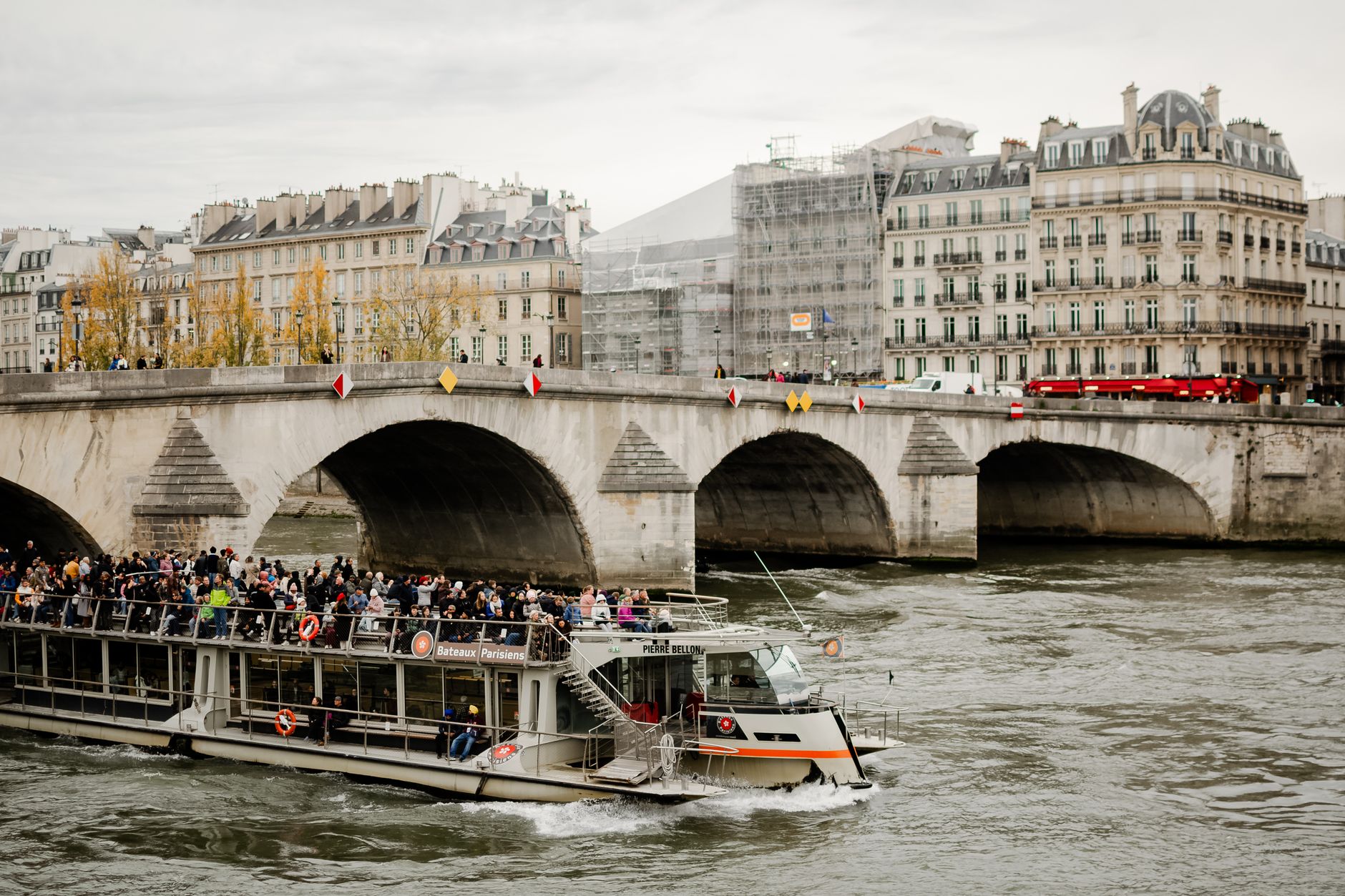
Seine River Cruise

Pass Eiffel Tower, Notre-Dame, Pont Alexandre III from water level. Sunset cruises offer illuminated landmarks and romantic ambiance without walking fatigue.

Browse all best first-timer tours →

Your First Day in Paris — Hour by Hour

Most first-timers waste day one recovering from travel or aimlessly walking the wrong direction. This plan assumes you arrive before noon and want to hit the ground moving.

Morning: [object Object]

Afternoon: [object Object]

Evening: [object Object]

Dinner: [object Object]

Total First Day Cost: 108

Insider

Book the Eiffel Tower summit at exactly 8 AM Paris time, 60 days in advance. That's when new slots release. Evening slots (7–11 PM) sell out first. The 60-day-ahead 8 AM release is not widely advertised but it's consistent. A calendar reminder 60 days before your visit date takes 30 seconds and saves 2 hours of queuing.

Tours That Actually Earn Their Price

A good first-day walking tour gives you orientation, honest context, and an answer to "what should I skip?" — things a guidebook can't do. These are worth the cost.

Louvre Museum Skip-the-Line Guided Tour
Featured

Louvre Museum Skip-the-Line Guided Tour

3h$89★ 4.72,847 reviews
Book →
Eiffel Tower Summit & Seine River Cruise with Champagne

Eiffel Tower Summit & Seine River Cruise with Champagne

4h · $124 Book →
Montmartre & Sacré-Cœur Walking Tour

Montmartre & Sacré-Cœur Walking Tour

2.5h · $45 Book →
Latin Quarter & Notre-Dame Cathedral Walking Tour
Latin Quarter & Notre-Dame Cathedral Walking Tour

2h · $35 Book →
Palace of Versailles Day Trip

Palace of Versailles Day Trip

8h · $159 Book →
Paris Orientation Hop-On-Hop-Off Bus Tour
Paris Orientation Hop-On-Hop-Off Bus Tour

2h · $48 Book →
Seine River Evening Cruise with Audioguide

Seine River Evening Cruise with Audioguide

1.5h · $28 Book →
Browse all best first-timer tours →

Where to Stay for the Best First Trip

Location matters more on a first Paris trip than any subsequent one. Being in the wrong arrondissement costs you 45 minutes of metro per day.

Hôtel du Louvre
Featured

Hôtel du Louvre

From $450/night
Book →
Le Pavillon de la Reine

Le Pavillon de la Reine

From $320/night Book →
Shangri-La Paris

Shangri-La Paris

From $650/night Book →
Hôtel de Crillon

Hôtel de Crillon

From $800/night Book →
Terrass Hotel

Terrass Hotel

From $280/night Book →
Hôtel des Grands Hommes

Hôtel des Grands Hommes

From $180/night Book →
Browse all best first-timer tours →

What to Eat in Your First 48 Hours

Your first Paris meals set the tone for the whole trip. These are the dishes and places that make you understand why Paris food is what it is.
Croissant
Featured

Croissant

$2
Book →
Croque Monsieur

Croque Monsieur

$12 Book →
Escargots à la Bourguignonne

Escargots à la Bourguignonne

$15 Book →
Coq au Vin

Coq au Vin

$28 Book →
Macarons from Laduree or Pierre Hermé

Macarons from Laduree or Pierre Hermé

French Onion Soup (Soupe à l'Oignon)

French Onion Soup (Soupe à l'Oignon)

$10 Book →
Tarte aux Pommes (Apple Tart)

Tarte aux Pommes (Apple Tart)

Browse all best first-timer tours →

Getting Around Without Getting Lost

The Paris metro is not complicated once you understand the zone and direction system. This explains it in five minutes.

Airport Arrival Step By Step: [object Object], [object Object], [object Object], [object Object], [object Object]

Transit System Overview: [object Object]

Metro Lines For First Timers: [object Object], [object Object], [object Object], [object Object], [object Object]

How To Use Metro: 1. Buy a carnet (10 tickets) or Paris Visite pass from machines using coins or cards., 2. Locate your destination on a metro map (posted in every station and on the RATP app)., 3. Insert ticket into the turnstile slot (arrow facing down). Gate opens; take your ticket and pass through., 4. Follow signs to your line by color. Most transfers (correspondances) require walking 5–10 min., 5. Trains arrive every 2–5 min central lines. Announcements are in French; check station name signs as doors open., 6. Exit (sortie) signs point you toward street exits. Some stations have multiple exits—check your hotel location.

Transit Safety Tips: Metro Lines B and D at night (after 10 PM) have occasional assault reports—use Uber or taxis late., Pickpockets target crowded trains (Lines 1, 4, 13 during peak hours). Keep bags zipped; wallets in front pockets., Stay alert in empty cars late at night. Move toward conductor's car if uncomfortable., Solo female travel is generally safe on daytime Metro; avoid empty cars after midnight.

Bikes And Other Transit: [object Object]

Mistakes First-Timers Make (and How to Avoid Them)

These are the mistakes that cost first-time Paris visitors time, money, and enjoyment. Most are avoidable with advance knowledge.

Featured

Book →
Browse all best first-timer tours →

First-Timer Questions Answered

The questions every Paris first-timer searches for before arrival, answered directly.

How many days do I need in Paris?
Three days covers the essentials: Eiffel Tower, Louvre, Notre-Dame, and a Seine cruise. Five days allows Versailles, Sainte-Chapelle, Montmartre, and slower neighborhood walks. One week lets you explore Giverny, Chartres, or deeper into food neighborhoods without rushing.
What should I do first in Paris?
After settling into your hotel, visit the Eiffel Tower (9 AM opening) or take a Métro orientation ride to understand the city layout. Afternoon Seine cruise or Tuileries Garden walk anchors you geographically. Evening dinner in a neighborhood bistro (not Eiffel Tower vicinity) sets the Parisian tone.
Is Paris safe for solo travelers, especially women?
Paris is generally safe for solo female travelers. Daytime is risk-free; exercise normal city precautions at night. Avoid deserted streets after 11 PM and RER Lines B and D after dark. Pickpocketing is the main risk on crowded Métro—keep bags zipped and hands in front pockets.
Do I need to speak French to get by?
No. English is spoken in hotels, major restaurants, and tourist areas. Learn five basic phrases (hello, thank you, excuse me, 'do you speak English?', how much) and carry a translation app. Older locals may not speak English—politeness opens more doors than language.
What's the best time to visit Paris?
April–May and September–October offer mild weather and fewer crowds than summer. June–August are peak season—expect lines, higher prices, and heat (75°F). November–March are cold and wet but cheapest. Avoid July if crowds stress you; visit in May or September instead.
How much does a typical day cost in Paris?
Budget travelers: €100–110/day (hostel €40, meals €30, attractions €20, transport €5). Mid-range: €250–300/day (€2-star hotel €130, meals €70, tours/attractions €50, transport €10). Comfortable: €500+/day (4-star hotel €250+, dining €150+, tours €100+, transport €10).
Should I buy a Paris Museum Pass?
Yes if visiting 3+ museums in 2 days. Two-day pass: €58; four-day pass: €78 (includes Louvre, Orsay, Versailles, Sainte-Chapelle). Saves €10–20 and skips most lines. Buy at airports, hotels, or tourist offices.
Can I use my phone and credit cards everywhere?
Yes. France uses 230V, Type C and E plugs—bring a universal adapter. Tap water is safe to drink. ATMs are everywhere; cards accepted at 95% of shops. Mobile data is pricey; buy an Orange Holiday SIM (€30 for 5GB) or use café WiFi.
What's the Metro system like for first-timers?
The Paris Métro is the fastest, cheapest way to move around. Buy a carnet (10 tickets for €26) or Paris Visite day pass (€12). Trains arrive every 2–5 minutes. Use the RATP app for directions. Lines 1, 4, and 13 are crowded during rush hours; Lines 6 and 7 are quieter alternatives.
Should I take a guided tour or explore on my own?
Take one orientation tour (Montmartre walk, hop-on-hop-off bus, Louvre skip-the-line) to learn the layout and history. Then explore independently using maps and neighborhoods guides. Tours cost €35–150 but eliminate navigation stress and provide context.
What's worth seeing on a day trip from Paris?
Versailles (30 min by RER, 5 hours): Hall of Mirrors and gardens. Giverny (45 min): Monet's house. Chartres (50 min): Gothic cathedral. All are accessible by train without a rental car. Book skip-the-line tickets online.
How do I avoid pickpockets and scams?
Keep bags zipped and hands on them on crowded Métro. Wallets in front pockets, phones in bags (not hands). Avoid groups asking for charity cards or signatures. Don't accept 'gifts' from strangers on the street. If lost, ask police in uniform or hotel staff—not random people.