
6 things to sort before you fly
Essentials for SpainMost visitors split their time between Barcelona and Madrid, then wonder why Spain felt rushed. Two cities in a week barely scratches the surface — San Sebastián has more Michelin stars per capita than anywhere on earth, and the Alhambra at sunrise has no equal in Europe. Pick one region and go deep.
FinderTrip research · April 2026Spain's Five Regions — What Each Actually Delivers
Spain is bigger than it looks on a map. The regions are distinct in climate, food, architecture, and pace. Choosing the wrong one for your travel style is the most common Spain mistake.
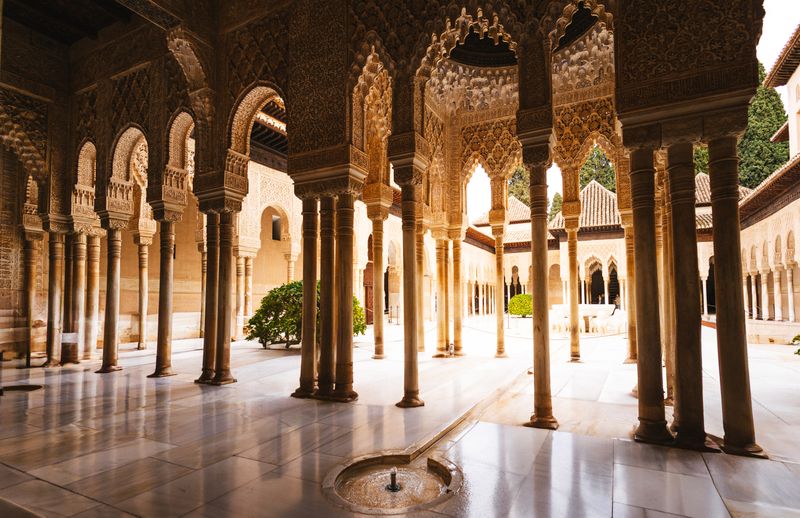
Andalusia — Seville, Granada, Córdoba, Málaga
The Alhambra alone makes Andalusia worth the trip. Add flamenco in Seville, the Mezquita in Córdoba, and tapas bars that give food away free with every drink, and you have Spain's richest cultural region. Go in spring (March-May) or autumn (October). July-August in Seville averages 37°C — genuinely difficult.

Catalonia — Barcelona, Costa Brava, Girona
Barcelona does Art Nouveau better than anywhere in Europe — and pairs it with a beach. Girona is a medieval walled city 37 minutes from Barcelona by train. Costa Brava has some of Spain's cleanest coves. Catalan cuisine (not Spanish — they'll remind you) includes the original pan con tomate and calcots with romesco. Book Sagrada Família before arriving.
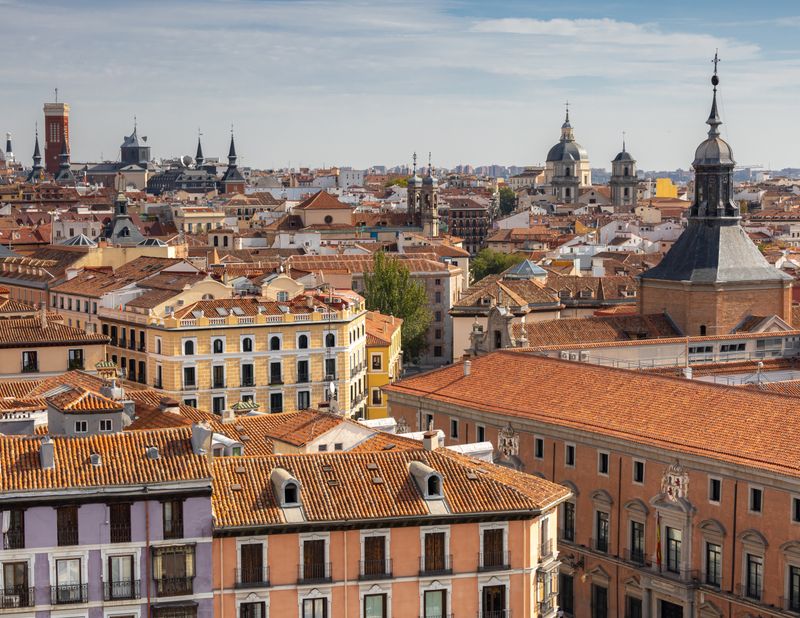
Madrid & Castile — Madrid, Toledo, Segovia
Madrid has the Prado (Velázquez, Goya, El Greco), the Reina Sofía (Guernica), and the Thyssen-Bornemisza — three world-class museums within 15 minutes of each other. Toledo, 30 minutes by AVE, is a medieval walled city. Segovia has a Roman aqueduct built in 98 AD, still standing without mortar. Madrid's restaurant scene doesn't start until 10pm. Plan accordingly.
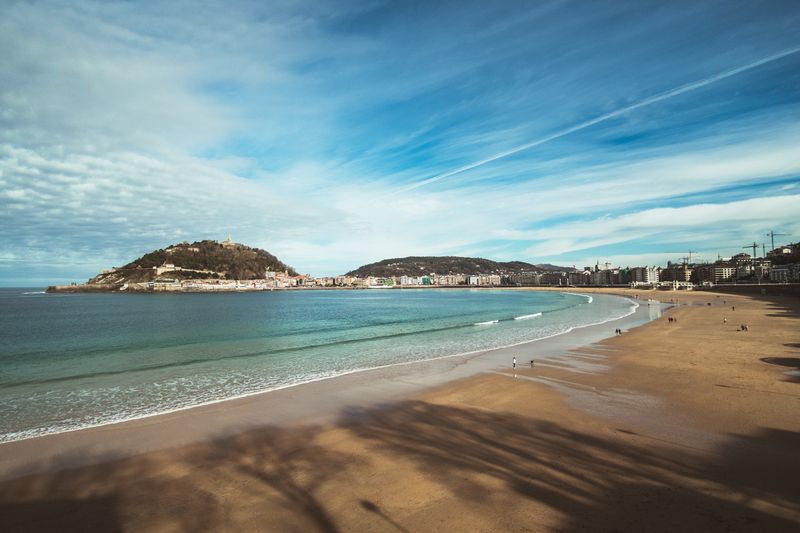
Basque Country — San Sebastián, Bilbao
San Sebastián (Donostia) has more Michelin stars per capita than any city on earth. The pintxos bars on Calle 31 de Agosto charge €2-3 per piece and are genuinely world-class. La Concha beach is routinely named Europe's best urban beach. Bilbao has the Guggenheim and an old town (Casco Viejo) worth half a day. Wetter and greener than the rest of Spain.
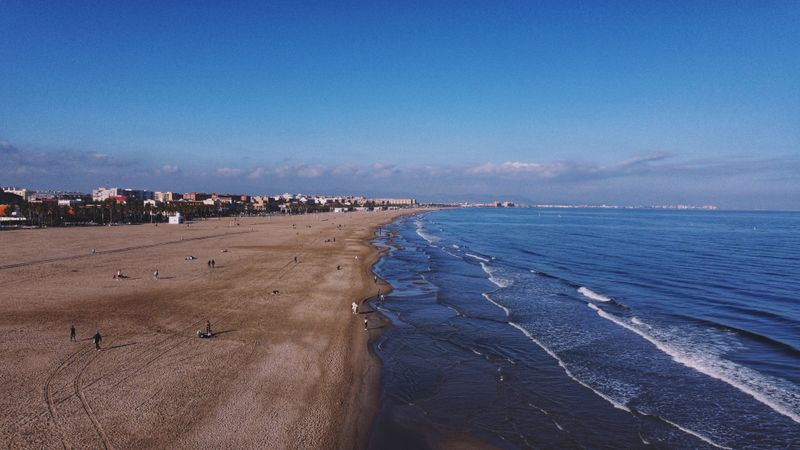
Valencia & Murcia — Valencia, Alicante, Murcia
Valencia is where paella was invented — Albufera lagoon rice fields are 20 minutes from the city centre. Santiago Calatrava's City of Arts and Sciences looks like a science-fiction set and costs €38 to visit in full. Alicante has a Moorish castle, a beach promenade, and the cheapest three-course lunches in mainland Spain. Year-round flying from most European cities.
Still deciding where to go in Spain?
In Barcelona and Madrid the tourist bus is slow, expensive, and goes exactly where you'd already walk. Barcelona's metro single ticket is €2.65 (T-Casual 10-trip: €12.55). Madrid's metro is €1.50-2.00 depending on zones. Both metro systems cover every major sight faster than surface traffic and without the selfie-crowd soundtrack.
Who is Spain Actually For?
Honest answer: almost everyone, but for genuinely different reasons.
Spain Cities — What Each One Is Actually Best At
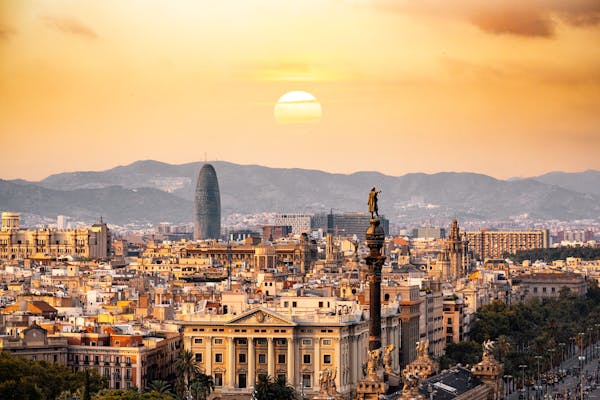
Barcelona — Art Nouveau, beaches, Gothic Quarter
Best for: first-timers, couples, city-break weekends. Sagrada Família, Park Güell, and Barceloneta beach in one city. Full guide live.

Madrid — Prado, Reina Sofía, nightlife that starts at midnight
Best for: museum marathons, nightlife, day trips to Toledo and Segovia. The triangle of Prado, Reina Sofía, and Thyssen is one of the world's great art clusters.
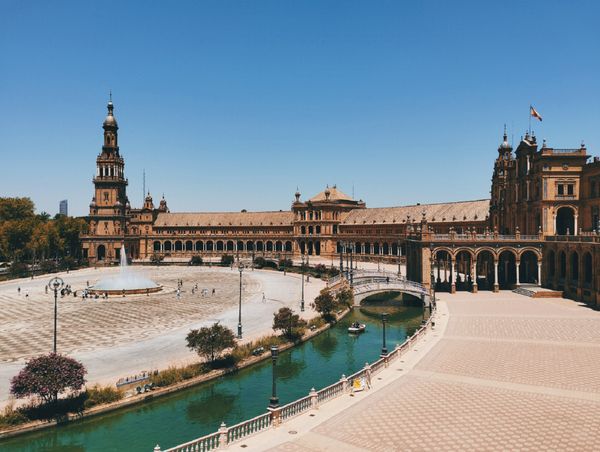
Seville — Flamenco, Alcázar, free tapas with every drink
Best for: Andalusian culture, romance, budget travel. The Alcázar is more intimate than the Alhambra and needs 3 hours. Flamenco is authentic here in a way it isn't in Barcelona.
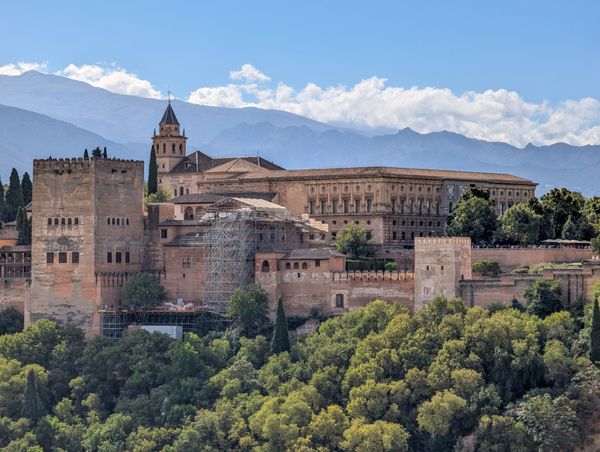
Granada — Alhambra, Nasrid Palaces, Sierra Nevada
Best for: the single greatest building in Europe (the Alhambra Nasrid Palaces). Book 2-3 months ahead or you won't get a slot. Evening tapas in the Realejo quarter are free.
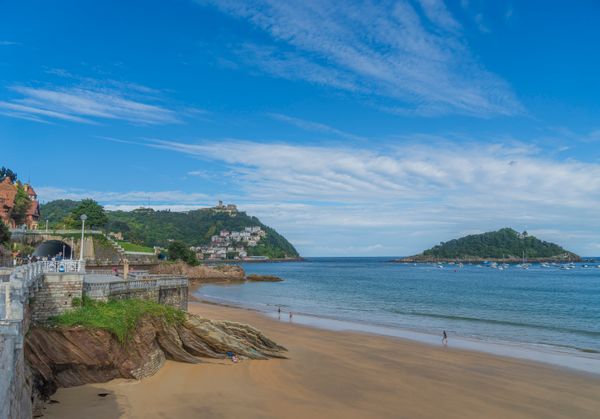
San Sebastián — Pintxos, La Concha beach, Michelin stars
Best for: food travel, Atlantic coast, short breaks from France or northern Spain. More Michelin-starred restaurants per capita than any city on earth. La Concha is Europe's finest urban beach.
Valencia — Paella origin, City of Arts, year-round sun
Best for: budget beach breaks, architecture, authentic paella. City of Arts and Sciences is Calatrava's masterpiece. Flights from most European cities are cheaper than to Barcelona.
Tickets That Always Sell Out in Spain
The Alhambra sells its Nasrid Palace slots weeks before the visit date. Sagrada Família queues without a ticket run to 90 minutes. Book before you land.
Alhambra + Nasrid Palaces — Timed Entry (Granada)
The Nasrid Palaces sell out 2-3 months ahead in high season. This is not marketing language — it's logistics. The timed-entry slot is strictly enforced: arrive 5 minutes late and you lose it. The Generalife gardens and Alcazaba fortress can be visited without a timed slot, but the palaces are the reason to go.
Sagrada Família — Skip the Line + Tower Access (Barcelona)
Without a ticket the queue is 60-90 minutes. With one you walk straight to the security check. The Nativity Tower gives the best overhead city view in Barcelona. The interior — Gaudí designed it to feel like a forest — is one of the most genuinely overwhelming interiors in Europe. Allow 2 hours minimum.
Prado Museum — Skip-the-Queue Entry (Madrid)
Velázquez's Las Meninas, Goya's Black Paintings, El Greco's entire output — the Prado is overwhelming in the best way. Online tickets skip the queue. A 2-hour guided highlights tour is worth it for first-timers: the permanent collection has 8,000+ works and without direction you'll spend it all in the Spanish Baroque wing.
Authentic Flamenco Show — Tablao (Seville)
Seville's tablaos (dedicated flamenco stages) are the closest thing to flamenco in its original form. A two-hour show at a proper tablao — with a live guitarist, singer (cantaor), and dancer — is not the tourist show you'd see in Madrid. Book 1-2 weeks ahead. Drinks are included at most venues.
Visa for Spain — Schengen Rules Apply
Spain is part of the Schengen Zone. That means one set of rules covers 27 countries — your Spain days count toward your Schengen total. If you've been in France, Germany, or Italy in the same 180-day period, those days count too.
Who needs what — verified April 2026
US, Canada, Australia, UK, most EU citizens
You get 90 days in any 180-day period across the entire Schengen Zone — not 90 days in Spain specifically. From 2025 onward, ETIAS pre-authorisation is required for all visa-exempt non-EU travellers.
US, UK, Canada, Australia, NZ and others
The European Travel Information and Authorisation System is required before entering any Schengen country. Apply at travel-europe.europa.eu/etias before your trip — it costs €7 and is approved within minutes for most nationalities. Valid for 3 years. Do not skip: airlines check at boarding.
India, China, most African and South Asian passports
A Schengen short-stay visa (type C) is required. Apply at the Spanish consulate in your home country at least 3 months before travel. If Spain is not your main destination, apply at the consulate of the country where you'll spend the most time.
US, UK, Canadian, and Australian visitors now need ETIAS before entering Spain or any Schengen country. It costs €7, takes 10 minutes to apply at travel-europe.europa.eu/etias, and is valid for 3 years across all 27 Schengen countries. Apply at least 72 hours before departure.
Getting Around Spain — AVE First, Then Bus
Spain's AVE high-speed rail is one of Europe's best — and genuinely fast. Madrid to Seville in 2h 30m costs less than the equivalent flight when you include airport transfers. For routes the AVE doesn't serve, ALSA coaches fill the gap. Rent a car only for rural Andalusia, the Pyrenees, or the Galician coast.
RENFE AVE (High-Speed Rail)
Madrid to Barcelona: 2h 30m. Madrid to Seville: 2h 30m. Madrid to Valencia: 1h 40m. Madrid to Granada: 3h 15m (via Antequera). Book on renfe.com or Trainline. Advance tickets from €20. Same-day prices are 3-5x more. Ouigo and Iryo also run cheaper AVE-speed services on the Madrid-Barcelona corridor.
ALSA Coach (Regional Routes)
Covers routes the AVE doesn't: Granada to Málaga (1h 30m, €12), Seville to Cádiz (1h 45m, €14), Barcelona to Valencia (4h, €20). Slower than rail but cheaper and with luggage in the hold. Book on alsa.es. FlixBus covers some international routes.
Car Hire (Rural Routes)
Andalusia's white villages (pueblos blancos), the Pyrenean foothills, Galicia's Rías Baixas, and the inland wine routes of Rioja require a car. Avoid driving in Madrid and Barcelona city centres — parking is expensive and the metro is faster. Major roads are free (autovías); motorways (autopistas) charge tolls.
The Eurail Spain pass almost never beats individual AVE advance tickets for Spain-only trips. It makes sense if you're combining Spain with Portugal and France and want flexibility. For most readers: book on renfe.com or Trainline 4-6 weeks ahead, keep the difference. Low-cost operators Ouigo and Iryo often beat RENFE advance prices on Madrid-Barcelona.
Spain drives on the right. The main surprises for visitors: two types of motorway (free autovías labeled A-, and tolled autopistas labeled AP-), a low-emission zone in Barcelona city centre (ZBE requiring a sticker), and strict drink-drive limits that catch visitors used to more lenient rules.
- Speed limits — 50 km/h in urban areas · 90 km/h on secondary roads · 100 km/h on dual carriageways · 120 km/h on motorways. DGT speed cameras are widespread and enforce strictly. Temporary 30 km/h zones in city residential areas are expanding rapidly.
- Motorway tolls (autopistas) — Autopistas (labeled AP-) charge tolls of €5-20 depending on distance. Autovías (labeled A-) are free. Most rental cars don't come with Via-T transponders — pay cash or card at toll booths. Don't enter the Via-T lane without a transponder.
- Barcelona ZBE (low-emission zone) — Barcelona's central area requires a ZBE sticker for vehicles registered outside Spain. Non-compliant vehicles face fines of €200+. The sticker is free for qualifying vehicles but requires registration 48h before entry. Avoid driving into central Barcelona entirely — parking is €3-5/hour and public transport is better.
- Drink-drive limit — 0.5 mg/ml blood alcohol (lower than the UK's 0.8). New drivers (licence under 2 years) and professional drivers: 0.3 mg/ml. Spain has random roadside breath tests — failing results in an immediate fine and possible licence suspension.
- Roundabout priority rules vary by region — some follow international standard (circulating traffic has right of way), others still follow the old Spanish rule (entering traffic has priority if there are no signs). When in doubt, yield.
- Peaje (toll plaza) queues on summer Fridays — coastal autopistas get congested from 16:00 toward beach destinations. Leave earlier or later.
- Narrow streets in old town centres (Granada's Albaicín, Seville's Santa Cruz) — GPS sometimes routes through pedestrian zones. Fines are €90-200.
- Guardia Civil traffic patrols on N-roads — carry passport, hire car documents, and insurance certificate at all times.
EU, US, Australian, Canadian, and most international driving licences are valid in Spain. An International Driving Permit (IDP) is recommended for non-Roman-script licences. Car hire companies require a credit card in the driver's name; debit cards are not accepted by most major companies.
Getting Between Spain Cities
Spain's AVE high-speed network beats flying for almost every domestic route when you factor in airport time. Low-cost operators Ouigo and Iryo run AVE-speed trains on the Madrid-Barcelona corridor from €9.
When to Visit Spain — Month by Month
April-June and September-October are the two best windows for most of Spain. Spring means mild temperatures (18-24°C), lower crowds, and green landscapes after winter rains. Autumn has harvest festivals and post-summer quiet. July-August is viable but hot (Seville averages 37°C) and expensive everywhere near the coast.
What Spain Actually Costs in 2026
Spain is consistently cheaper than France, the UK, and Italy — and the gap is wider than most people expect. A sit-down three-course lunch (menu del día) with wine, bread, and sometimes dessert costs €12-16 at a neighbourhood restaurant. The same meal in Paris would be €28-35.
Budget traveler (hostel, menu del día, metro): €60-80/day. Barcelona and Madrid trend toward the top of this range; Seville, Granada, and Valencia toward the bottom. Free tapas with drinks in Granada, Seville, and Almería effectively cuts your food budget further.
Mid-range (3-star hotel, restaurant meals, one paid sight): €130-180/day in Barcelona; €100-150 elsewhere. Hotels in the Barri Gòtic or near the Prado carry a location premium — book 6-8 weeks ahead for best rates.
Costs that surprise visitors: Museum audio guides (€5-7), Alhambra Nasrid Palace timed slots (book 8+ weeks ahead or pay €3-5 premium via third-party), Barcelona club entry (€15-25, drinks €10 each), and Sagrada Família entrance (€26-36 depending on tower access).
What's genuinely cheap: coffee (cortado €1.20-1.80), cerveza caña (small beer €1.50-2.50), city metro rides (€1.50-2.65 depending on city), and vermouth hour (vermut) where a glass of house vermouth with olives is €2-3 before 2pm.
Is Spain safe?
Spain is a safe destination for the vast majority of tourists. Violent crime in visitor areas is low. The main concern is opportunistic theft — pickpocketing on La Rambla in Barcelona, around Puerta del Sol in Madrid, and on Barcelona's metro lines 1 and 3. Common scams are non-violent and avoidable.
- La Rambla in Barcelona has improved after heavy policing but remains the pickpocket hotspot in Spain. Keep phones in zipped pockets, bags on your front, and don't stop to engage with street performers in large crowds.
- The 'plain-clothes police' scam: someone claiming to be an undercover officer asks to 'inspect your wallet for counterfeit notes or drug residue.' Real police do not do this. Do not hand over your wallet. Walk away or enter the nearest business.
- Beach theft in summer: don't leave bags unattended while swimming. Lockers at beaches near Barcelona and Valencia cost €1-2 per hour. An unlocked bag left on the sand for 10 minutes will not be there when you return.
- Emergency numbers: 112 (EU-wide — medical, police, fire; works from any phone including no-SIM mobiles), 091 (National Police), 062 (Civil Guard/Guardia Civil), 061 (Medical emergency in some regions). English-speaking operators are available on 112.
Save this page for later
Get this exact page as a clean PDF. No extras — just an easy version to keep on your phone or print. Unsubscribe anytime.
Plan Your Spain Trip in 3 Steps
If you want to build your Spain trip without overthinking it — here is the fastest path from zero to booked.
Book the Alhambra first
Before picking your hotel or flights. The Nasrid Palace timed slots sell out 2-3 months ahead in spring and summer. Lock in a slot at alhambra-tickets.es (official site). Then build your Granada itinerary around it.
→ Check Alhambra availability →Pick one anchor city per region
A common mistake is moving cities every 2 days. A better frame: Barcelona for Catalonia (day trips to Girona, Montserrat), Madrid for Castile (Toledo, Segovia), Seville for Andalusia (Córdoba, Cádiz). One anchor = less transit time, more depth.
→ See all city guides →Avoid Semana Santa and August if budget matters
Easter week (Semana Santa) is spectacular in Seville and Granada — processions every night — but hotel prices double and the Alhambra is booked solid 3 months out. August on the coast is Spain's domestic holiday month. Prices peak, beaches crowd, and restaurants close in smaller towns.
→ Best months for Spain →